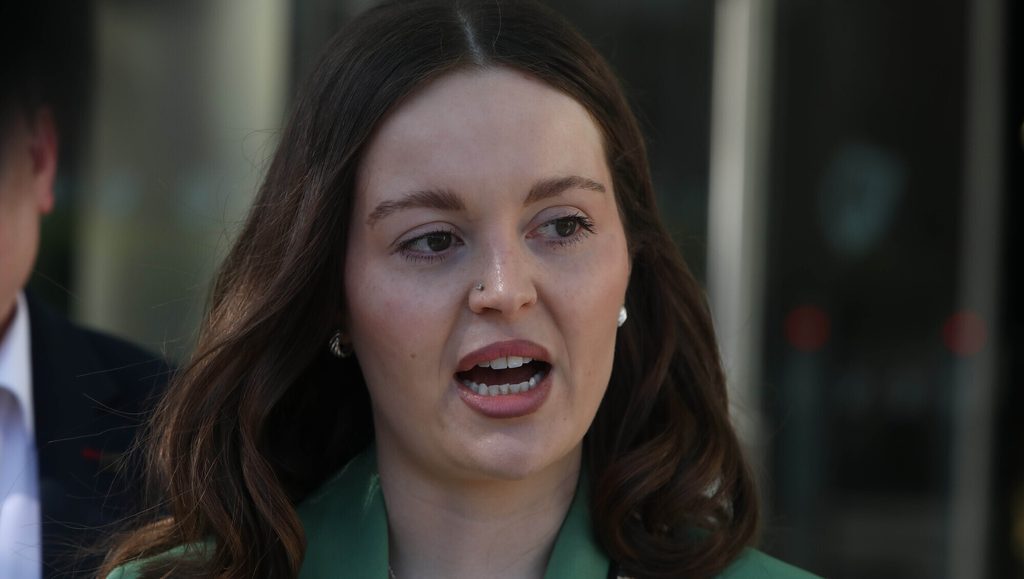
Beyond Surviving founder Ciara Mangan spoke to Mayo News after the publication of independent research by Dr Sinéad Ring (Maynooth University), supported by Rape Crisis Ireland, on how section 3 of the Criminal Law (Rape) Act 1981 is used in Irish sexual offence trials. The report found that 39% of sexual offence trials in 2025 involved an application to admit sexual history evidence.
Ciara described the report as “a welcomed insight into what survivors are up against in their pursuit of justice and accountability, which should serve to inform reform” of this area of law. She explained: “We know from our own survey report at Beyond Surviving that the intrusion of one’s privacy in the courtroom, and the mere anticipation of such, is a deep concern for survivors. Survivors tell us they often feel powerless to protect their dignity in court, affecting their decisions to engage meaningfully in the criminal justice system.”
Ciara continued: “When applications are made on the first day of trial, survivors have no time to understand what’s being sought, prepare, or get support,” adding: “That is a major barrier to access to justice. We welcome this report and want to see reform that gives survivors clear, early information and genuine, fair opportunities to engage in a process that holds great power over their lives.”
Beyond Surviving Community Member Voices
One said: “I find using any of the victims’ sexual history in a court absolutely abhorrent and completely unacceptable.” Another drew a comparison with fraud cases: “It’s another strand of victim blaming in sexual assault cases that has no place in the justice system in 2026. If you change the word ‘rape’ to ‘fraud’ and think about someone who was defrauded giving evidence in court against the fraudster, asking someone where else they spent money, or their financial history, seems utterly outrageous, and irrelevant to them being defrauded. Of course it wasn’t their fault. Why is rape different?”
You can read the Mayo News interview here.
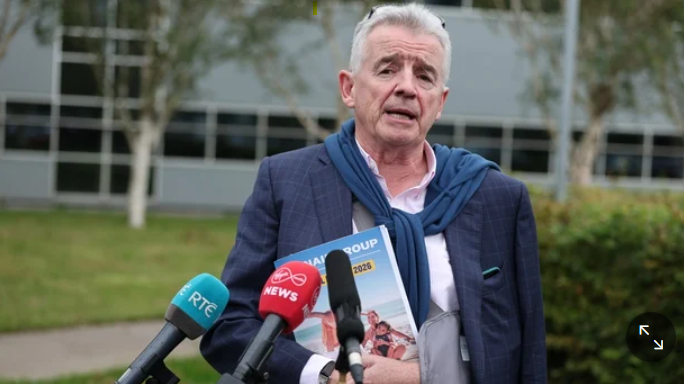
Beyond Surviving founder Ciara Mangan spoke to RTÉ’s Drivetime and Irish Independent after Michael O’Leary (CEO of Ryanair) described rival airlines as “high-fare rapists” at Ryanair’s annual general meeting.
Ciara explained on the show how survivors often cannot say the word “rape” or “rapist” for years: “That is how much meaning this word has,” adding that Mr O’Leary had demonstrated how meaningless the word was to him. She said his comments were deeply concerning and reflected on his character, and joined the call for him to publicly apologise, adding: “Without a shadow of a doubt, that offence was certainly felt by countless survivors and their families across Ireland today.”
You can read the RTÉ report here and Irish Independent interview here.
Photo source: https://www.rte.ie/news/2026/0910/1591085-call-apology-oleary-ryanair/
Beyond Surviving CEO Ciara Mangan spoke to the Irish Examiner after a survivor’s dress was produced as evidence during Limerick rape trial.
The survivor was 15 and convicted was 18 at the time of the assault, which took place at a party. During the trial, she was also questioned in court about her underwear that night. Cork Sexual Violence Centre’s outgoing CEO Mary Crilly and Dublin Rape Crisis Centre also spoke out, both noting that clothing has no bearing on consent and that this approach echoes tactics common decades ago.
Ciara described the practice as “a form of public humiliation” that does the opposite of encouraging survivors to come forward.
You can read the full piece through the link here.
Ciara spoke to the Irish Examiner about the impact of the ongoing legal aid dispute on survivors, following reports that most rape trials scheduled at the Central Criminal Court this week could not proceed.
A flat-fee system introduced on 1st July has led around 55 solicitors to resign from the legal aid panel. Social Democrats leader Holly Cairns reported that 10 of the 12 rape trials listed for the Central Criminal Court this week were unable to go ahead. Rape Crisis Ireland has called for the dispute to be resolved quickly, and the Law Society is holding an Oireachtas Day this week to address it.
Drawing on her own experience of the criminal justice system, Ciara spoke about the psychological and financial toll that trial delays and adjournments take on survivors and their families, including costs that often go unreimbursed. “I know too well the psychological stress that comes with delays,” she said. It’s a toll Beyond Surviving continues to hear echoed across our community.
You can read the full interview through the link here.
Ciara has been shortlisted for Social Entrepreneur of the Year – Community Impact at the IMAGE PwC Businesswoman of the Year Awards 2026.
This recognition, Ciara says, “reflects work that began from a simple, yet profound question in 2023: where to next? At Beyond Surviving, we are building that next step: a space for connection, community, growth and continuity of support that has long been missing in the sector.“
“To be recognised in a category centred on community impact feels especially meaningful, because this has always been survivor-led, shaped by lived experience, and grounded in the belief that survivors deserve to not just survive, but to reclaim, live and thrive.“
To seek insights on how the current practices in Ireland’s criminal justice system affect people, we launched a comprehensive survey, open to all survivors, and in one week, we received over 300 responses.
The results reflect the clear and consistent consensus among survivors that there is an urgent need for change to ensure a fairer criminal justice system. However, the disclosure of counselling records is a complex and sensitive issue, and a “one size fits all” legislative solution risks deepening harm to survivors by overlooking nuances, and failing to reflect the diversity of their lived experience.
You can read the full report through the link here.
Ciara, CEO of Beyond Surviving, and Sarah, Board member and fellow survivor joined Lunchtime Live with Andrea Gilligan to discuss our most recent comprehensive survey on the Use of Counselling Notes in Sexual Offence Trails.
Initial results highlight that many survivors of sexual assault did not remember consenting to the use of their counselling notes in court, the survey has found.
You can listen back to the interview through the link here.
Ms Grace, a corporate lawyer and certified yoga teacher, has been appointed to the board as Legal Trustee.
She brings extensive legal expertise, combining her two passions of effective corporate governance and building a brighter future for all survivors of sexual and gender-based violence.
Commenting on her appointment, Ms Grace said: “I am so honoured to have joined the board of Beyond Surviving, a survivor-led charity whose mission is to offer healing and wellbeing support to those affected by domestic, gender and sexual-based violence.“
Beyond Surviving warmly welcomes Sarah to the Board and looks forward to the impact her expertise and passion will bring to the organisation and the wider DSGBV landscape. We echo the response to Sarah’s appointment and are privileged to have her join us on this important journey.
Mr Mussett, a former Chief Financial Officer, has been appointed to the Board as Financial Trustee.
He is a qualified Chartered Management Accountant (CIMA) and brings extensive financial expertise, having worked predominantly for US multinationals prior to his retirement.
Beyond Surviving warmly welcomes Andrew to the Board and looks forward to the impact his expertise will bring to the organisation. We are privileged to have him join us on this important journey.
The day brought to mind a statement shared by founder Ciara during an Ireland AM interview in April 2025, reflecting on her experiences within Ireland’s criminal justice system: “There is no consideration for the victim.” Sadly, many of Friday’s speakers echoed how true this remains across Europe.
Too often, victims are expected to navigate systems that view them merely as witnesses, rather than individuals whose lives are profoundly affected by such legal procedures. Many are left without timely information, without recognition, and without the dignity of being seen as more than a case number. Justice is treated as a process of accountability and punishment alone, while for so many survivors, justice also means being respected, supported, heard and considered.
Beyond Surviving remains committed to amplifying survivor voices and championing a justice system that truly considers, respects and centres those at its core.